

City as Canvas: We Are Part of the Picture

Looking at Art, Living in a City
There is something interesting about looking at an artwork and living in a city. In both cases, we encounter something that already exists, something shaped by people, decisions, histories, and relationships.
In a gallery, we can look at an artwork, interpret it, appreciate it, dislike it, or walk away. We bring our own experiences and perspectives to what we see, but we do not necessarily have to participate in creating the artwork for it to exist.
We can also move through a city this way. We can enjoy its streets, visit its shops, appreciate its architecture, or simply go about our daily lives without thinking much about how the city came to be or how it might change.
But a city is not simply something we look at. It is a place we live in, work in, and move through. Our lives are already connected to what happens there, whether or not we actively participate in shaping it.
I have been thinking about the city as a canvas for artists, partly because of how my own artistic practice has developed over the years.
As a visual artist, I naturally notice color, form, composition, materials, and how a place looks and feels. But my understanding of what it means to be an artist has expanded beyond making visual objects.
My practice includes creating spaces for people to come together, working with people who have different kinds of knowledge, asking questions, designing experiences, and experimenting with what might happen. Sometimes the result is an object or an installation. Sometimes it is a conversation, a relationship, a new question, or a possibility that did not exist before.
This is art to me.

Making a Mark
Before opening Play Full Ground in Monterey in 2017, I had experiences that brought together art, education, and the city in different ways. At City Studio in San Francisco, I worked with art and educational programs connected to urban spaces and communities. Later, through Y-PLAN at UC Berkeley, I worked with young people exploring urban planning and civic engagement.

These experiences allowed me to bring my perspective as an artist and educator into settings where people were thinking about places, communities, and how they might develop. They also helped me see how artistic ways of looking, questioning, and imagining could connect with things happening beyond the art studio.
Those experiences helped shape what I wanted to create in Monterey.
Opening Play Full Ground was one way I put those ideas into action. I wanted to create a place where people could explore, follow questions, experiment, and see what might happen without needing to know the outcome in advance.
The studio is an imaginative space, but it is also a real place in a real community. It has walls, neighbors, schedules, resources, limitations, and relationships. Running a studio involves decisions, ongoing work, and interactions with the world around it. Play Full Ground exists within the larger picture of Monterey, not apart from it.
In that sense, Play Full Ground is also an ongoing art project. The place is part of the work, as are the people who enter it, the things we explore together, and the possibilities that develop over time. What happens there continues to evolve through the people and ideas that become part of it.
What Happens When We Participate?
When I begin an artwork, I do not always know exactly what it will become. I start somewhere, try something, notice what happens, and respond. Sometimes what happens changes my original idea or opens a direction I had not considered. The first mark is not the conclusion. It is a beginning that makes the next mark possible.
My canvas is not always a physical surface. Sometimes it is a space, a relationship, a question, or an experience. And sometimes, perhaps, it is a city.
One example is Coastal Conversations, a series I am developing with ecologist Emily Gottlieb. Emily and I come to the world with different kinds of knowledge and different ways of seeing. Through our collaboration, I have begun to experience the ocean differently.
Before working with Emily, I mostly experienced the ocean visually. I could appreciate its beauty, but I was largely a viewer. Through her ecological knowledge, I began to notice more of the relationships already there: among seaweed, coastal creatures, oxygen, carbon, habitat, food, and human life.
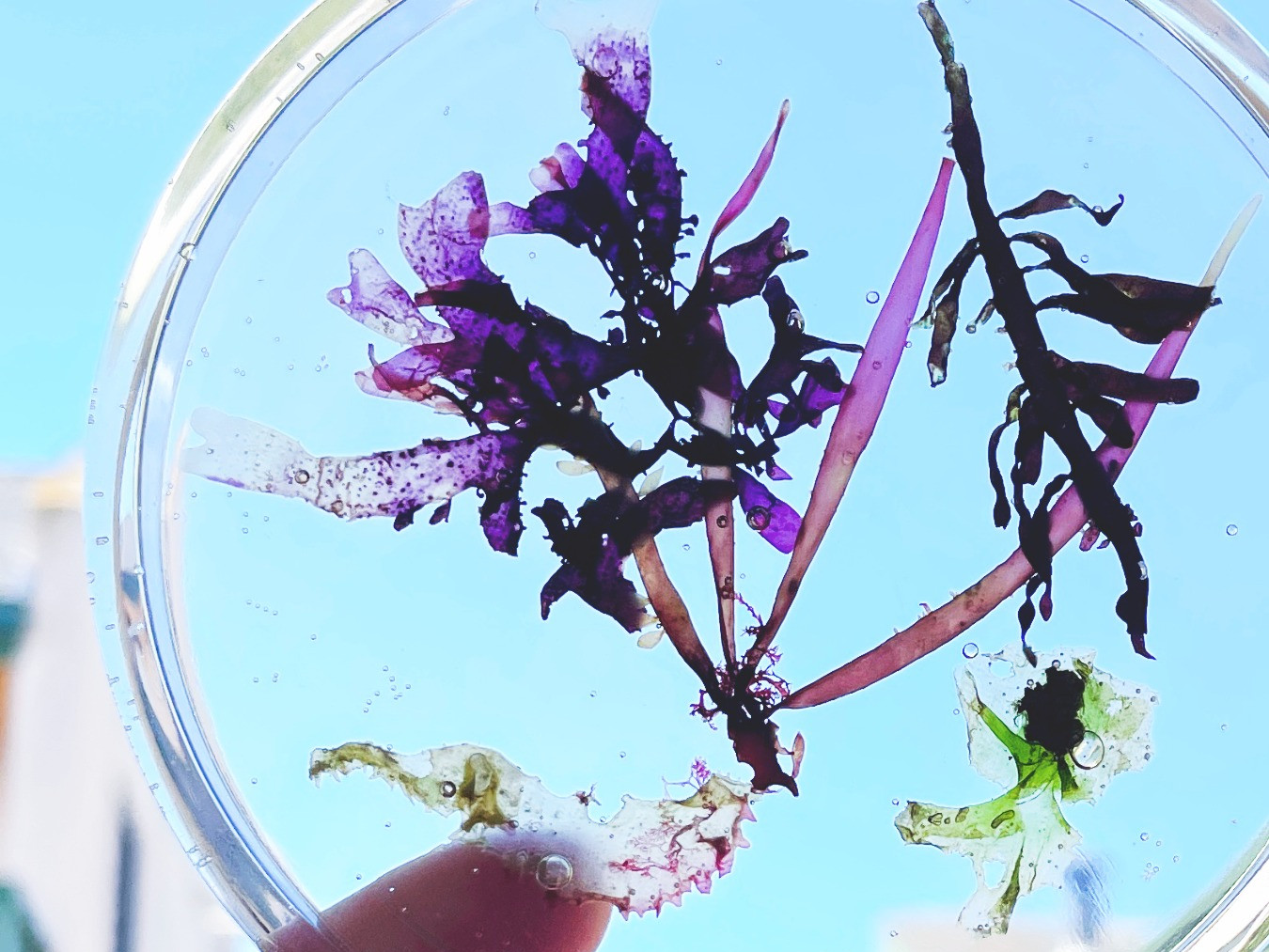
Our upcoming Coastal Conversations experience will bring us to the coast to observe and learn about seaweed, then back to the studio to experiment with making color from it. I am interested in creating experiences where people can encounter a place through another person's way of seeing, bring their own questions and experiences, and discover what might emerge when they explore something together.
If you would like to participate, you can join us for the upcoming Coastal Conversations gathering. Come curious, bring your questions, and see what might emerge.
I cannot know in advance what everyone will notice or where the conversation will lead. Participants bring their own ideas and experiences, and those contributions become part of the work. We may leave with a different understanding, a new question, or a possibility we might not have found on our own.
This is what interests me about working with other people. The experience is not entirely determined by one person's original idea. It can change through participation.
Inviting More People to Participate
Maybe what I am trying to do at Play Full Ground is not make more artists in the conventional sense, but invite more people to participate.
People often come to an art studio to learn painting, drawing, or other techniques. But that is not the main point for me. I am interested in what happens when people move from thinking about something to actually doing something with it.
We all have ideas, questions, and things we would like to try. But how often do those thoughts become actions?
At Play Full Ground, I want to create space for that transition: to notice something, ask a question, imagine a possibility, and take a first step toward it.
To make a mark.
Making a mark, in this sense, is taking action. It is the Do in my Think > Do > Share approach. And when that action enters the world beyond our own private space, other people can encounter it, respond to it, contribute to it, and take it somewhere we might not have imagined.
I love seeing what happens when different ideas meet, when someone responds to what another person has started, and when the result becomes something none of us could have created alone. This is part of what draws me to collaborations, including my work with Emily and others.
In that sense, perhaps we can all be artists.
Not because we all need to make paintings or identify ourselves as artists, but because we can all take part in shaping the picture. Artists are not working in isolation from the world, either. Our work is in conversation with materials, ideas, circumstances, and other people. What begins as an individual expression can become something others encounter, interpret, respond to, and help transform.
I wonder what might happen if we approached the making of a city, or the making of our shared future, with that same openness and curiosity. Not as something designed entirely in advance by someone else, but as a process we can enter, contribute to, and influence together.
This is one reason I want to bring the spirit of Play Full Ground beyond the studio and into everyday civic life. I want to explore how curiosity, experimentation, and collaboration might create possibilities in the places where we live, work, and spend time together.
My participation in the City of Monterey's First City Academy has been one way of getting to know the city from another perspective. Through these sessions, I have learned more about how the city works and met some of the people and departments behind its operations. The experience has also made me think about how residents can become more involved in the life of the city.

I am still learning, and I am curious about what might happen when I bring my perspective as an artist and educator into these conversations.
Participation can take many forms. Sometimes it looks big: showing up at a public meeting, joining an organizing effort, or advocating for change. Sometimes it looks small: sharing an observation, joining a conversation, or trying something alongside other people. We cannot always know what one action might set in motion.
The city is not a blank canvas waiting for someone to begin. It is already full of marks, made by many people over time. None of us has the whole picture at the beginning, and the picture is never entirely finished.
Someone makes a mark. Someone else responds. The picture changes. Another person enters with a different possibility. The picture changes again.
I love that change, that evolution, and the possibility that something new can emerge through participation.
Making, in this sense, is not only about producing something. It is a way of participating.
We are not only looking at the picture. We are part of it.
What might happen if more of us made a mark?


Comments